Sophion user publications: Q1 2026’s ion channel research continues apace
Q1 2026 showcased a diverse array of sensory science, covering: cooling, pain, pacemaking, anesthesia, cardiac and seizure safety pharmacology, P2X3 drug design, and many more papers powered by automated patch clamp. As is often seen, despite the rich tapestry of research covered, there is a thread that runs through: tiny current shifts can ripple out to very human outcomes.
The following are some selected studies to highlight:
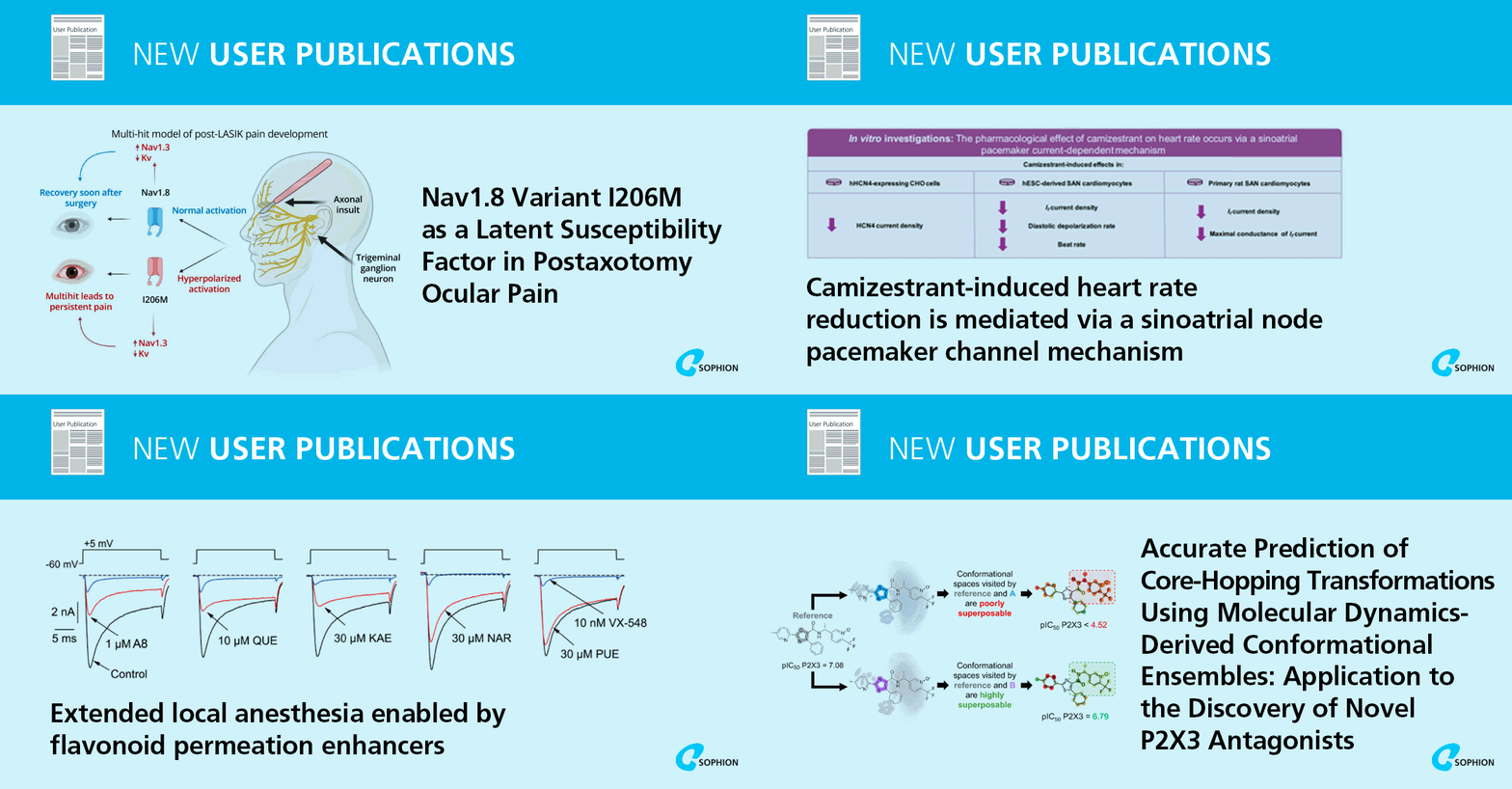
- Ghovanloo et al., after previously tackling Nav1.7, TRPV1 and TRPM8 variants, have turned their attention to post-LASIK persistent ocular pain via Nav1.8 (SCN10A). They showed that the I206M variant subtly shifts channel activation to more negative voltages and boosts trigeminal neuron firing, supporting a “latent susceptibility and nerve injury” multihit story.
- Hall et al. traced camizestrant’s clinical heart rate dip back to the sinoatrial node. Using QPatch recordings, they implicate HCN4: camizestrant dampens pacemaker current activity via this ion channel, giving cardiac safety teams a clear mechanistic culprit.
- Han et al. stretched local anesthesia duration by helping site-1 sodium channel blockers (e.g. TTX, neosaxitoxin) cross biological barriers. The study shows flavonoids (e.g. puerarin) act as permeation enhancers, pushing nerve blocks from hours to days and, with liposomes, weeks.
- Pala et al. mixed molecular dynamics with wet-lab reality for P2X3 antagonists. Developing the ‘DynaCore’ algorithm, combined with Qube electrophysiology, helped identify chemical scaffold swaps that maintain potency whilst discarding less promising candidates
Congratulations to all authors contributing to this quarterly round-up.